


Concerns about spots
and pigmentation
There are various types of spots and pigmentation. Proper diagnosis is the first step before starting treatment.
Types of pigmentation spots
- Age spots (solar lentigines)
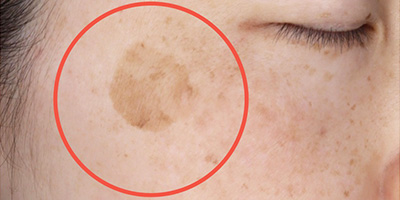
- Characteristics
Caused by ultraviolet (UV) exposure. They appear as round, patch-like spots, as if a sticker has been placed on the skin. - Treatment
- Melasma
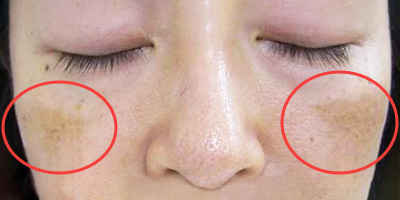
- Characteristics
Symmetrical, cloud-like, diffuse patches that appear as a blurred pigmentation. - Treatment
- Potenza (M)
- MesoNa J
- Aqua Injection (Filorga Injection)
- Photofacial (Stellar M22)
- Oral medications, etc.
- Post-inflammatory hyperpigmentation
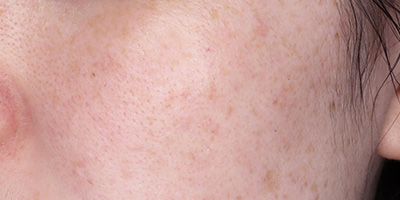
- Characteristics
Pigmentation that remains after inflammation, such as acne marks turning into dark spots. - Treatment
- Freckles
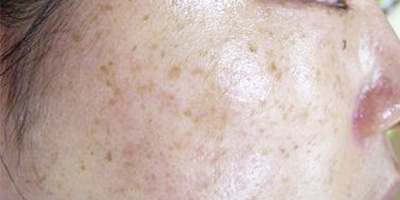
- Characteristics
Often appear from the teenage years. Small pigmented spots, typically around 2 mm or less in size. - Treatment
Treatment for pigmentation spots
-
Q-switched ruby laser
A standard treatment for sun-induced age spots. The treated area forms a scab, which naturally falls off after about two weeks.
- For those with prominent, larger spots
- For those who want to remove spots in a short period of time
-
Photofacial (Stellar M22)
IPL is a treatment device that emits broader-spectrum light than lasers. It helps lighten overall facial pigmentation while also minimizing the appearance of pores, leading to brighter, more translucent skin.
- For those with small spots scattered across the face
- For those who are sensitive to pain or prefer minimal downtime (such as scabbing after treatment)
-
Super phototherapy (MaxG)
Phototherapy using IPL. It is suitable for treating multiple small spots scattered across the entire face at once.
- For those with small pigmentation spots spread across the face
- For those who cannot afford downtime
-
Potenza (M)
A treatment device using a new method called needle RF (radiofrequency). It improves pigmentation and melasma from within the deeper layers of the skin without forming scabs. Another advantage is that there is no downtime.
- For those with melasma or diffuse dullness spread across the entire face
- For those who cannot afford downtime
-
MesoNa J
This is the world’s first transdermal delivery device that has passed strict medical device quality standards (such as JIS standards and EMC testing). It safely delivers active ingredients into the dermal layer of the skin.
- For those with noticeable, larger pigmentation spots
- For those who are sensitive to pain or prefer minimal downtime (such as scabbing after treatment)
-
Picosecond laser (enlighten SR)
This laser uses three different irradiation modes and is expected to be effective for pigmentation spots and dullness. It has minimal downtime and does not require protective tape after treatment.
- For those concerned about many small or faint pigmentation spots
- For those concerned about slightly larger spots (5 mm or more)
- For those who cannot afford downtime
Treatment methods vary depending on the condition of the skin.
We recommend the most suitable procedures tailored to each patient’s skin condition.
Please feel free to make an appointment and visit us.


